
 English
 Pусский
 日本語
日本語 हिन्दी
산업용 열교환기
An industrial heat exchanger is a mechanical device designed to transfer thermal energy between two or more fluids without allowing them to mix. It plays a critical role in many industries by helping control process temperatures, improve energy efficiency, and maintain safe operating conditions. These systems are widely used in chemical processing, oil and gas, power generation, HVAC, food and beverage production, pharmaceuticals, marine applications, and metal processing.The basic function of a heat exchanger is simple: one fluid gives up heat while another fluid absorbs it. This process can involve liquids, gases, steam, or a combination of these. Depending on the application, the fluids may flow in parallel, counterflow, or crossflow arrangements. Among these, counterflow designs are often preferred because they provide higher thermal efficiency. The actual construction of a heat exchanger varies based on performance requirements, pressure levels, temperature ranges, and fluid properties.There are several common types of industrial heat exchangers. Shell-and-tube heat exchangers are among the most widely used because they are durable, versatile, and suitable for high-pressure and high-temperature applications. Plate heat exchangers use thin metal plates to create a large surface area for heat transfer, making them compact and efficient. Air-cooled heat exchangers rely on ambient air instead of water, which is useful in locations where water resources are limited. Finned-tube and spiral heat exchangers are also used for specialized duties where fouling resistance or compactness is important.Materials used in construction are selected carefully to withstand corrosion, erosion, thermal stress, and operating pressure. Common materials include stainless steel, carbon steel, copper alloys, titanium, and nickel-based alloys. In demanding environments, material choice is especially important to ensure long service life and reliable operation. The design must also account for maintenance access, cleaning requirements, and possible fouling caused by deposits or contaminants.Efficiency is a major advantage of industrial heat exchangers. By recovering and reusing heat that would otherwise be wasted, industries can reduce fuel consumption, lower operating costs, and decrease environmental impact. For example, waste heat from one process stream can be transferred to a colder stream that needs preheating. This improves overall plant performance and supports sustainability goals.Proper operation and maintenance are essential for long-term performance. Over time, heat transfer surfaces may become fouled by scale, dirt, or residue, reducing efficiency. Regular inspection, cleaning, and monitoring of temperature and pressure conditions help keep the equipment running effectively. In many facilities, heat exchangers are critical assets, and their reliability directly affects production continuity.In summary, an industrial heat exchanger is an essential piece of equipment that supports thermal management across a wide range of industries. Its ability to transfer heat efficiently, safely, and reliably makes it a key component in modern industrial systems.
제품
범주:
-
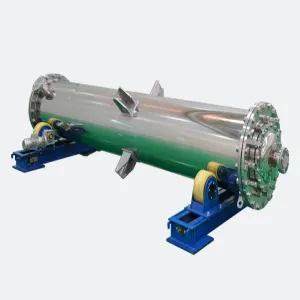
열교환기
분류: 여과 및 열교환 장비조회수: 194번호:릴리스 시간: 2026-06-08 09:52:53열 교환기는 혼합 없이 두 유체 사이의 효율적인 열 에너지 전달을 위해 설계된 중요한 산업 장치입니다. 화학 처리, 석유 및 가스, 식품 생산, 제약, 반도체 산업에서 널리 사용되는 열교환기는 안정적인 온도 제어, 에너지 효율성 및 공정 안전을 보장합니다. 일반적인 유형에는 쉘 앤 튜브, 플레이트, 나선형 및 공냉식 설계가 포함되며 각각은 다양한 작동 조건에 적합합니다. Jiangsu Jiexin New Material Co., Ltd.는 내구성, 효율성 및 장기적인 운영 신뢰성이 요구되는 까다로운 산업 응용 분야를 위해 설계된 내식성 및 PTFE 라이닝 시스템을 포함한 고성능 열교환기 솔루션을 제공합니다.
뉴스
범주:
검색 결과가 없습니다!
케이스
범주:
검색 결과가 없습니다!
비디오
범주:
검색 결과가 없습니다!
다운로드
범주:
검색 결과가 없습니다!
모집
범주:
검색 결과가 없습니다!
추천 제품
검색 결과가 없습니다!



 왓츠앱
왓츠앱 핸드폰
핸드폰